

Day 9: Judah
GENESIS 49:8 – 12
The sceptre will not depart from Judah, nor the ruler’s staff from between his feet . . . — Genesis 49:10
Graveyards provide history lessons. We understand this well in Poland, where numerous graveyards remind us of our troubled history – trouble from wrongs done to us and trouble from our own wrong choices. Moreover, in the town where I currently live and serve, families face complicated lives due especially to unemployment and addiction – issues arising from factors outside and within their control.
When you read the genealogy of Jesus, you might feel as though you’re walking through an old graveyard – reading the tombstones of His ancestors, one name after another. Behind each name lies a story, and many of those stories are complicated. Jesus was born into a very problematic family.
As you stroll through this “graveyard,” one tombstone stands out, more magnificent than the others: Judah. It sounds familiar. Jesus came from the tribe of Judah. In the Book of Revelation, John describes Jesus as the Lamb on the throne and calls Him the Lion of the tribe of Judah. He is the true King.
Hearing this, you might assume Judah was a great hero or a strong leader. But as with every name in Jesus’s genealogy, there’s a story – and often a difficult one. Judah is no exception. Though born into a remarkable family, Judah never felt special. Through no fault of his own, he was the fourth son of Jacob and Leah, the wife Jacob loved less. The favoured place in the family was reserved for Joseph, the son of Rachel, Jacob’s beloved wife.
Judah also made some terrible choices. It was his idea to sell his brother Joseph into slavery. We know little about his parenting, but two of his sons dishonoured God and died as a result. Later, Judah unknowingly slept with his daughter-inlaw and made her pregnant. Then, unaware of her identity, he nearly had her executed. Judah had a knack for complicating life – his own and others’.
Yet even Judah had moments of reflection and transformation. The same man who sold Joseph into slavery eventually offered himself as a slave to rescue his younger brother Benjamin. He was ready to sacrifice his own freedom to save his brother’s life, and in this beautiful act, he pointed ahead to the king we all need.
Some time later, as Jacob sensed the end of his life approaching, he called his sons to bless them. Judah, fourth in line, likely waited with apprehension. The first three brothers received harsh words – Jacob spoke of their past sins rather than their future. Judah probably didn’t expect much better.
But then came a surprise. Jacob referred to him as a lion, a creature indicating strength and royalty (Genesis 49:8–9). Judah the Lion? He could hardly believe his ears. As he tried to understand these words, his father continued:
The sceptre will not depart from Judah, nor the ruler’s staff from between his feet, until he to whom it belongs shall come and the obedience of the nations shall be his.
Jacob said that Judah’s descendants would reign over God’s people until the arrival of One who would rule the nations. Then he spoke something about a donkey and robes dipped in the blood of grapes (Genesis 49:10–12). It was overwhelming. Who is this King?
We know Him. He was born into the tribe of Judah, into a deeply flawed family. He rode into Jerusalem on a donkey. The wine-red robes remind us of His blood. He will one day rule the nations and bring peace, but He first came to save people whose choices complicate lives.
This King – Jesus Christ – didn’t just offer His life for others, like his ancestor Judah did for Benjamin. He actually gave it, sacrificing Himself for our salvation. Because of His grace, people like Judah – and like you and me – can begin again, no matter how troubled the past or how complicated life seems. Walking through the graveyard of Jesus’s ancestors and reading the names on the tombstones is more than a history lesson. It’s an invitation to be honest about our own troubled histories and receive the grace of Jesus to join the family of God.
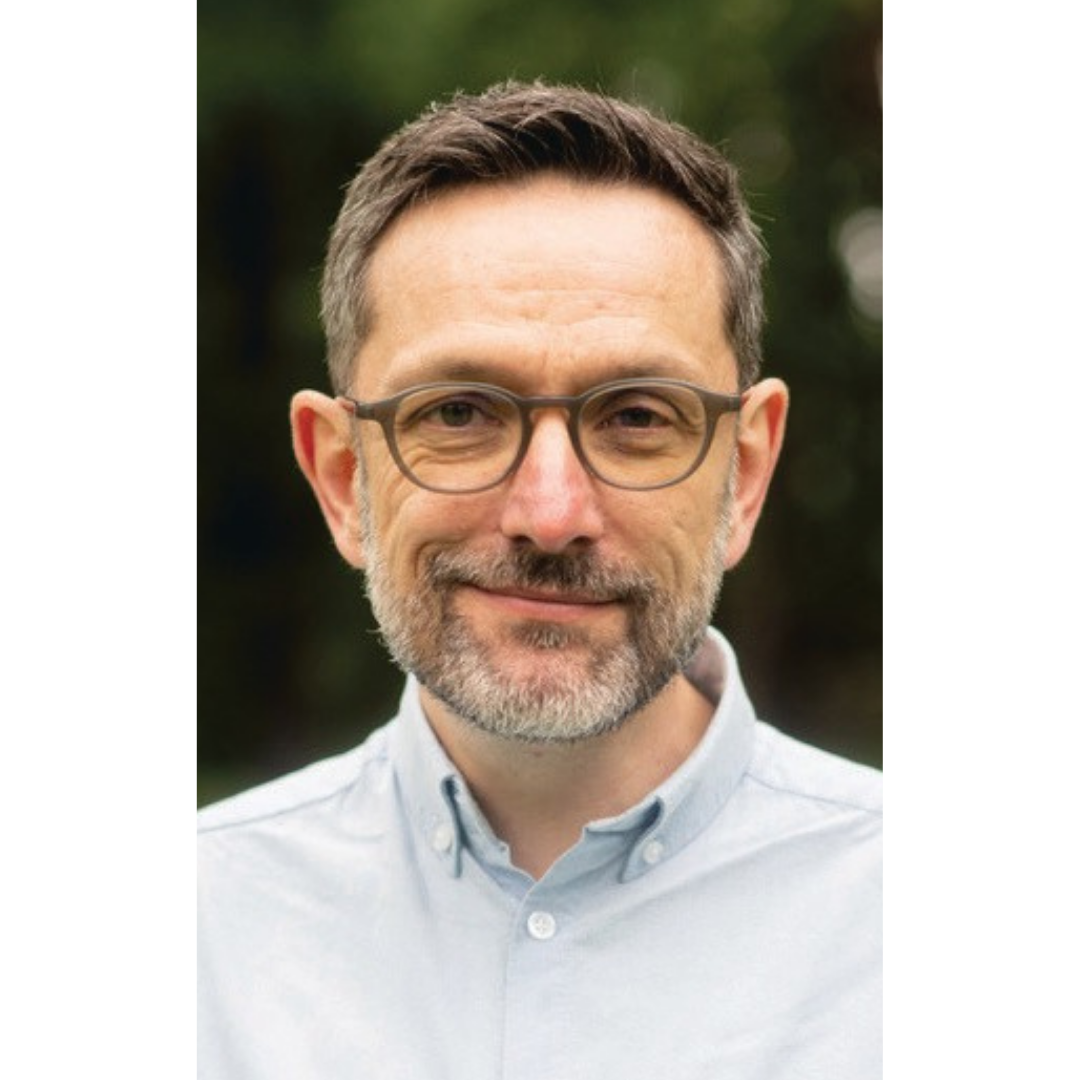

ADAM SZUMOREK
Poland
Adam Szumorek is a Langham-published author, preacher, writer and teaching pastor at TOMY Christian Fellowship in Tomaszów Mazowiecki, Poland. He teaches preaching in various contexts and currently serves as an adjunct professor of homiletics at the TCM International Institute.
Watch the devotion being read by one of our Langham family.