

Day 2: Seth
GENESIS 4:25 – 26
At that time people began to call on the name of the LORD. — Genesis 4:26
The births recorded early in the Bible are seen as evidence that God is still involved, despite the rebellion and brokenness now present in His creation. Following the fall into sin in the Garden of Eden, God pronounced judgements on the serpent, Adam and Eve. For humanity, the original harmonious relationship between the man and the woman would now be tainted with strife. The woman’s responsibility of being the mother of humankind would be accompanied by pain, the ground would no longer yield bountifully as intended and they would not be allowed to remain in Eden, enjoying the presence of God (Genesis 3:14–24).
Despite all of this, God does not abandon His people or His purposes. He continues to be available to help them in their struggles. In Genesis 4:1 and 4:25 respectively, we see Eve acknowledging the help of God for the birth of both Cain, allowing her to continue the mandate to be fruitful and multiply despite the pain now involved, and Seth, graciously replacing the son, Abel, lost to violence in the now-broken world. The fact that Seth also gets a son, Enosh, assures us that the fruitfulness and multiplication will continue.
But that’s not all that God cares about in His creation. The last statement of the text is worth our attention:
At that time people began to call on the name of the LORD.
This statement testifies to the character of God. It is part of God’s sovereign purpose for men and women to seek after Him, as Acts 17:26–27 affi rms:
From one man he made all the nations, that they should inhabit the whole earth; and he marked out their appointed times in history and the boundaries of their lands. God did this so that they would seek him and perhaps reach out for him and find him, though he is not far from any one of us.
Years ago, when I read this, I wondered to myself, who taught Seth and the people at the time to call on the name of the Lord? Perhaps Adam and Eve were among those who called on the name of the Lord since, according to Genesis 5:1–5, Adam lived for many hundreds of years after the birth of Seth. What would it have been like for them to call on the Lord with whom they used to fellowship in Eden in the cool of the day? The text doesn’t say more or give any details about how or why people did so, just that they did. And its mention means that it is important to God.
In fact, it looks like, since the time of Seth, God continues to put in the hearts of men and women a desire to invoke His name. In Uganda where I live, there is a wave of this awakening of people invoking the name of God. They loosely refer to their fellowship meetings as “the altar.” At such meetings, there is an abandonment of the individuals to the rule of God Almighty through confession of Jesus Christ as Lord and Saviour, repentance of past sins and renouncing involvement in other religious practices outside of Christ’s lordship. Membership in some of these fellowships is by people with not much education. Some of them cannot read and write, but their experience of the living God cannot be denied. Similar fellowships can be found in high-end professional offices and in church communities.
Indeed, God responds when we call upon Him and is present among His people, making the truth of Immanuel, God with us, a reality for God’s people in my context today and around the world. May God’s stirring of the hearts of men and women to invoke His name continue to be heeded and His gracious presence experienced as we celebrate the birth of Jesus Christ this Christmas.
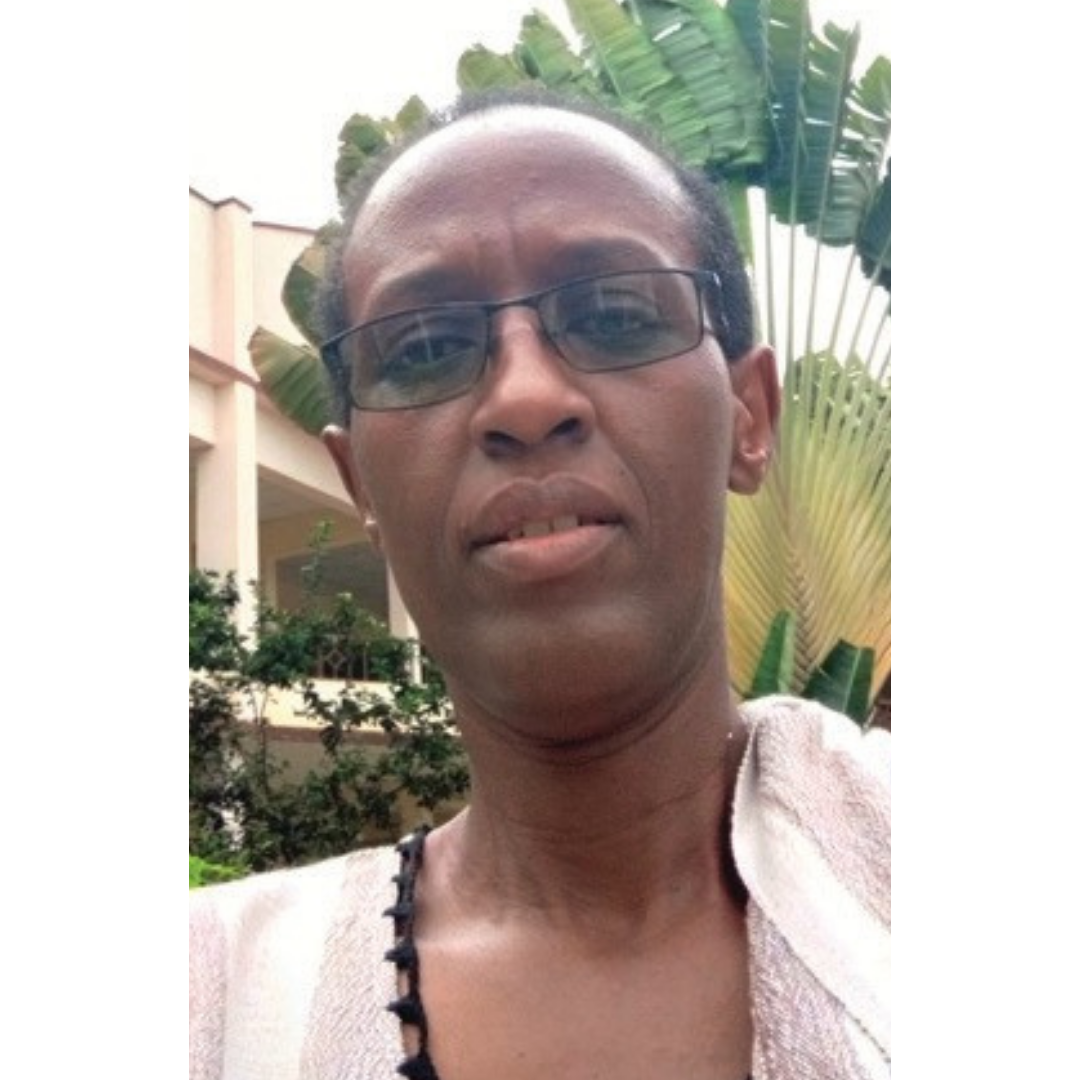
BARBARA TUMWINE
Uganda
Barbara served Langham Preaching in the role of regional coordinator for East Africa until just recently and continues as a facilitator for the preaching movement in Uganda. She is married to Paul Majoli, and they are members of Rubaga Baptist Church in Jinja, where Paul is on the preaching team and Barbara is involved with the women’s ministry.
Read the devotion being read by one of our Langham family below.